- My Forums
- Tiger Rant
- LSU Recruiting
- SEC Rant
- Saints Talk
- Pelicans Talk
- More Sports Board
- Fantasy Sports
- Golf Board
- Soccer Board
- O-T Lounge
- Tech Board
- Home/Garden Board
- Outdoor Board
- Health/Fitness Board
- Movie/TV Board
- Book Board
- Music Board
- Political Talk
- Money Talk
- Fark Board
- Gaming Board
- Travel Board
- Food/Drink Board
- Ticket Exchange
- TD Help Board
Customize My Forums- View All Forums
- Topic Sort Options
- Trending Topics
- Recent Topics
- Active Topics

TheFretShack
| Favorite team: | |
| Location: | |
| Biography: | |
| Interests: | |
| Occupation: | |
| Number of Posts: | 1370 |
| Registered on: | 10/28/2015 |
| Online Status: | Not Online |
Recent Posts
Message
re: What's the best platform to sell a used musical instrument these days?
Posted by TheFretShack on 4/4/26 at 4:12 pm to dirtsandwich
I don't see what's confusing about anything I wrote. But if leading off with "moral" is confusing enough to discount my content leading up to it, probably a poor word choice on my part. I will eventually delete "moral" from the last graph so that it is not mistaken as a capsule summary for what I wrote leading up to the graph.
Also, I did not say only buy from storefronts. If you re-visit that paragraph, you will see my advice on what to look for regarding private sellers.
Speaking of advice ... while much of what I wrote should be common sense for any buyer or seller on any online platform ... everything I have written in this entire thread is my own two cents. Your own mileage and experiences and opinions on these platforms may - and should - vary.
Also, I did not say only buy from storefronts. If you re-visit that paragraph, you will see my advice on what to look for regarding private sellers.
Speaking of advice ... while much of what I wrote should be common sense for any buyer or seller on any online platform ... everything I have written in this entire thread is my own two cents. Your own mileage and experiences and opinions on these platforms may - and should - vary.

 0
0
re: What's the best platform to sell a used musical instrument these days?
Posted by TheFretShack on 4/4/26 at 12:13 pm to shutterspeed
You are going to get eaten alive $$$-wise taking an instrument to a shipping place and having them supply the box and padding material and having them pack it for you on top of the shipping fee and insurance.
There are tutorials galore on YouTube on how to properly pack and ship a guitar or bass. You can buy boxes from the UPS and FedEx stores, from Uline, from Reverb and I think Amazon. A true cheapskate like me dumpster dives at GC for thrown-away boxes.
Don't pad the box with peanuts, they shift and settle in transit and leave the top of the parcel unprotected. Use crumpled paper, old newspapers, old catalogs. Tip from a pro ... it's actually cheaper to go to a second-hand bookstore and buy markdowns and/or stupidly discounted damaged books and harvest and re-use that paper than it is to buy formal packing insulation materials.
There are tutorials galore on YouTube on how to properly pack and ship a guitar or bass. You can buy boxes from the UPS and FedEx stores, from Uline, from Reverb and I think Amazon. A true cheapskate like me dumpster dives at GC for thrown-away boxes.
Don't pad the box with peanuts, they shift and settle in transit and leave the top of the parcel unprotected. Use crumpled paper, old newspapers, old catalogs. Tip from a pro ... it's actually cheaper to go to a second-hand bookstore and buy markdowns and/or stupidly discounted damaged books and harvest and re-use that paper than it is to buy formal packing insulation materials.
re: What's the best platform to sell a used musical instrument these days?
Posted by TheFretShack on 4/4/26 at 11:26 am to shutterspeed
I'm getting great rates for UPS and USPS via pirateship.com. I can't speak highly enough about Pirate Ship as a third-party shipping intermediary. They actually caught an overestimate on my part by a few ounces on a parcel I sent and refunded me a little postage!
re: What's the best platform to sell a used musical instrument these days?
Posted by TheFretShack on 4/4/26 at 10:13 am to TheFretShack
The best way to sell these days IMHO is through social media. But not just Facebook Marketplace, also (especially) specialty enthusiast pages on FB with names like "Baton Rouge Musicians" or "South Louisiana Guitarists." Same goes for forums like this one ... in 11 years of coming here, I can't tell you about any other section of Tiger Droppings, I'm just here for the Music Board and all y'all :)
Pros: No commissions. In your backyard, so no shipping fees. Because they are localized groups, there's a great shot buyers/sellers are mutual friends, former band mates, go to the same music venues or stores, etc.
Also, just a tip ... don't wait until you "need" those enthusiast pages or forums. Join them now, participate and contribute, give before you take, and establish your reputation and merit before it's needed.
Pros: No commissions. In your backyard, so no shipping fees. Because they are localized groups, there's a great shot buyers/sellers are mutual friends, former band mates, go to the same music venues or stores, etc.
Also, just a tip ... don't wait until you "need" those enthusiast pages or forums. Join them now, participate and contribute, give before you take, and establish your reputation and merit before it's needed.
re: What's the best platform to sell a used musical instrument these days?
Posted by TheFretShack on 4/4/26 at 9:55 am to TheFretShack
Reverb: They also typically side with buyers over sellers in a toss-up scenario, but they have third-party moderators who are good about looking at both sides objectively and making the proper decision.
I bought a $1700 guitar on Reverb a few months ago and after the seller exhibited very shady delays and responses why regarding shipping the instrument, I reported it and requested Reverb's mods review our messaging history and timelines. Reverb cancelled the transaction immediately - like within an hour - refunded my money within one day, thanked me for reporting the seller and banished his Reverb presence.
Be aware, however, that the fees to sell have creeped up since they became a leader in gear transactions. They are currently at 5% commission on the total sale amount (including shipping, which is skyrocketing in recent times) and a payment processing fee of 3.19% + $0.49.
I bought a $1700 guitar on Reverb a few months ago and after the seller exhibited very shady delays and responses why regarding shipping the instrument, I reported it and requested Reverb's mods review our messaging history and timelines. Reverb cancelled the transaction immediately - like within an hour - refunded my money within one day, thanked me for reporting the seller and banished his Reverb presence.
Be aware, however, that the fees to sell have creeped up since they became a leader in gear transactions. They are currently at 5% commission on the total sale amount (including shipping, which is skyrocketing in recent times) and a payment processing fee of 3.19% + $0.49.
re: What's the best platform to sell a used musical instrument these days?
Posted by TheFretShack on 4/4/26 at 9:42 am to shutterspeed
eBay: As a general rule, I recommend for a buyer, NOT a seller, because eBay always sides with the buyer in the case of a dispute.
Why is this a big deal? Because in recent years, there's been this hustle where shady people buy and receive your gear and then after you leave them great feedback as a buyer, they message you on the back end saying they have not left great feedback for you because your description was inaccurate.
Even though seller details all wear or issues as best they can, complete with photography, the buyer actually found one extra pinhead-sized ding in the clearcoat on the tip of the headstock that wasn't divulged. Or the seller failed to reveal the case smelled excessively like the case liner adhesive. Or something equally nitpicky, OCD or just flat out stupid.
Buyer then says their "luthier" will "fix the issue" for $250, so "please refund me $250 or I will leave negative feedback." Meaning your reputation is held hostage. And remember what I said, eBay ALWAYS sides with the buyer even if it's the seller filing the dispute!
Moral: If you buy from eBay, buy from a business with a physical storefront alongside an eBay store so you can research reputation both online and in person. DO NOT buy from private sellers unless they have years of transaction history AND stellar feedback from throughout that tenure.
Why is this a big deal? Because in recent years, there's been this hustle where shady people buy and receive your gear and then after you leave them great feedback as a buyer, they message you on the back end saying they have not left great feedback for you because your description was inaccurate.
Even though seller details all wear or issues as best they can, complete with photography, the buyer actually found one extra pinhead-sized ding in the clearcoat on the tip of the headstock that wasn't divulged. Or the seller failed to reveal the case smelled excessively like the case liner adhesive. Or something equally nitpicky, OCD or just flat out stupid.
Buyer then says their "luthier" will "fix the issue" for $250, so "please refund me $250 or I will leave negative feedback." Meaning your reputation is held hostage. And remember what I said, eBay ALWAYS sides with the buyer even if it's the seller filing the dispute!
Moral: If you buy from eBay, buy from a business with a physical storefront alongside an eBay store so you can research reputation both online and in person. DO NOT buy from private sellers unless they have years of transaction history AND stellar feedback from throughout that tenure.
re: American Strat or MIJ?
Posted by TheFretShack on 3/30/26 at 4:44 pm to Shanegolang
You can move the pickups and harness from the MIA to the MIJ without issues. You can move just the pickups, but I'd recommend moving the entire assembly in that the MIA should have better CTS pots.
90s MIJ Fujigen will have either Maxon pots (not bad but not as good as CTS) or Alpha pots (good all the way on or all the way off but not a lot of function or "colors" from 2 to 9).
90s MIJ Fujigen will have either Maxon pots (not bad but not as good as CTS) or Alpha pots (good all the way on or all the way off but not a lot of function or "colors" from 2 to 9).
re: Any of y'all familiar with Robin guitars?
Posted by TheFretShack on 3/25/26 at 12:12 pm to auggie
Thanks but I'm good, he and I have been friends for decades and I actually fed info to Willie for the Robin book. Two of my Carondelet artists (Steve Blaze of Lillian Axe, Scott Dalhover of Dangerous Toys) are former Robin artists from waaay back in the day.
Willie and I got to briefly hang out this past weekend at Amigo Nashville, he's doing great.
Willie and I got to briefly hang out this past weekend at Amigo Nashville, he's doing great.
re: Any of y'all familiar with Robin guitars?
Posted by TheFretShack on 3/25/26 at 8:26 am to auggie
Dave Wintz's obit in Vintage Guitar Magazine
Met Dave in the early 1990s, when I was just a player with a dream one day of being in the instrument repairing and building business. Dave and I remained good friends until his death.
I owned one of the first Robin Revival guitars (their take on a Texas blues S-style) and was very familiar with not only the entire line, but the factory and processes and Dave's mentality on every aspect of guitar building. He gave me priceless tips on creating and using an effective HVLP spray booth for polys and nitros without spending a ton of money. We were NEVER competitors, we were comrades.
"Robin" was in fact a spinoff on Rockin' Robin Guitars in Houston, the retail outlet. They started with MIJ guitars ghost-built for them by Tokai (and they were KILLER). After they established themselves beyond fly by night, they built a state of the art CAD/CNC factory.
Dave had a primo, absolutely enviable, tonewood collection for the Texas builds. He used to come to south Louisiana once a year to source lightweight swamp ash direct from the northern Atchafalaya Basin. He'd always put in a call and invite me to join him. I was always too busy with my day job. I truly regret not taking him up on those scavenger hunts now that he's gone.
Robin's existence berthed their in-house Rio Grande Pickups. Truth be told, Rio made a bigger wave in its market than Robin in its market. Rio's still around. So is Robin but I have no clue to what depth or scope - I lost interest when Dave passed.
Dave was not married and without any heir apparent or any real play for Robin's future when he passed in 2022. Robin had already gone belly up, Dave had a fretted repair shop in the former factory. After his death, the facility sat dormant and in limbo because his landlord had yet to be made whole, at least that's what I was told by a mutual friend who doubled as an insider.
The current owner of Rio Grande and Robin was an amp maker when Dave's "estate" was settled. I heard they obtained all the factory's assets, from machinery to IP and the Rio Grande and Robin trademarks, via a sheriff's auction but that's hearsay on my part.
An insider was ready to put my name in the hat to acquire Rio Grande and the entirety of its assets, but I opted to stick with Carondelet's plan and trajectory. As much as I would have loved to continue Dave's legacy, he was 100 percent supportive of what I was doing with my own pickup company and had he still been alive, he would have told me to not ride his coattails and to make my own. So glad I did.
Thanks for reminding me of Dave and Robin, fond memories, and he's greatly missed by many of us. Rest in power, my friend.
Here's that Robin Revival I owned. Sorry for the lame photos from a later owner, I have no photos from when I owned it. I got it direct from Dave shortly after it was built. Only about two dozen Revivals were made, of which only two units were "shell pink." No clue who had the other one.


Met Dave in the early 1990s, when I was just a player with a dream one day of being in the instrument repairing and building business. Dave and I remained good friends until his death.
I owned one of the first Robin Revival guitars (their take on a Texas blues S-style) and was very familiar with not only the entire line, but the factory and processes and Dave's mentality on every aspect of guitar building. He gave me priceless tips on creating and using an effective HVLP spray booth for polys and nitros without spending a ton of money. We were NEVER competitors, we were comrades.
"Robin" was in fact a spinoff on Rockin' Robin Guitars in Houston, the retail outlet. They started with MIJ guitars ghost-built for them by Tokai (and they were KILLER). After they established themselves beyond fly by night, they built a state of the art CAD/CNC factory.
Dave had a primo, absolutely enviable, tonewood collection for the Texas builds. He used to come to south Louisiana once a year to source lightweight swamp ash direct from the northern Atchafalaya Basin. He'd always put in a call and invite me to join him. I was always too busy with my day job. I truly regret not taking him up on those scavenger hunts now that he's gone.
Robin's existence berthed their in-house Rio Grande Pickups. Truth be told, Rio made a bigger wave in its market than Robin in its market. Rio's still around. So is Robin but I have no clue to what depth or scope - I lost interest when Dave passed.
Dave was not married and without any heir apparent or any real play for Robin's future when he passed in 2022. Robin had already gone belly up, Dave had a fretted repair shop in the former factory. After his death, the facility sat dormant and in limbo because his landlord had yet to be made whole, at least that's what I was told by a mutual friend who doubled as an insider.
The current owner of Rio Grande and Robin was an amp maker when Dave's "estate" was settled. I heard they obtained all the factory's assets, from machinery to IP and the Rio Grande and Robin trademarks, via a sheriff's auction but that's hearsay on my part.
An insider was ready to put my name in the hat to acquire Rio Grande and the entirety of its assets, but I opted to stick with Carondelet's plan and trajectory. As much as I would have loved to continue Dave's legacy, he was 100 percent supportive of what I was doing with my own pickup company and had he still been alive, he would have told me to not ride his coattails and to make my own. So glad I did.
Thanks for reminding me of Dave and Robin, fond memories, and he's greatly missed by many of us. Rest in power, my friend.
Here's that Robin Revival I owned. Sorry for the lame photos from a later owner, I have no photos from when I owned it. I got it direct from Dave shortly after it was built. Only about two dozen Revivals were made, of which only two units were "shell pink." No clue who had the other one.
re: Is Alice in Chains Unplugged the best of that series?
Posted by TheFretShack on 3/12/26 at 8:25 am to Larry_Hotdogs
Showing my age, but I really enjoyed the Unplugged episode with Kiss. They showed with acoustics and stools that their songs - both staples and deep cuts - were strong enough to stand on their own without all the pyro and blood spitting and fire breathing. THAT was so much cooler than the idea it paved the way for the first reunion with Ace and Peter.
Kiss on MTV Unplugged ... August 9, 1995
Kiss on MTV Unplugged ... August 9, 1995
re: Paging Fret Shack... The Luthier's Workshop Thread
Posted by TheFretShack on 3/3/26 at 9:34 am to Mizz-SEC
One is a device called a String Butler which replaces the truss rod cover and acts as a roller string tree making sure each string is going straight into the nut slot.
Gimmicky overkill IMHO, a properly slotted and lubricated nut is the best fix.
A couple of other devices are out there meant to reduce the immense break angle of the Bigsby B50 vibrato. One hooks over the back bar (eliminating the hook string attachment rods) and essentially making it a string through. The other device (BiggsFixx) replaces and elevates the center bar thus reducing the massive amount of tension the B50 creates.
Based not on my experience with Bigsbys but instead with the OEM vibrato units on JMs and Jaguars ... fine tuning the break angle could definitely help alongside that roller bridge. Lube the rollers too!
- I'm also reading a wound G string set helps. Locking tuners, etc.
A wound G's outer wrap wire will create more friction than a plain G so stop reading that author's suggestions.
Locking tuners are great if you don't know how to properly string up or stretch them out in the first place. I recommend learning the latter and THEN investing in locking tuners if you are still having problems.
This is going to turn into a war of wills for me. I love the tone and playability of this guitar and am not going to take no for answer.
Roller bridge (with lubed rollers), decreased bridge break angle, properly cut and lubed nut, good quality tuners, properly strung, properly stretched out.
Use the Bigsby only for subtle vibrato as it was DESIGNED and INTENDED to be used, absolutely no dive bombs, yank ups or aggressive wiggle stickery that is best served by a Floyd or its equivalent.
And you will STILL have periodic tuning problems with a Bigsby. But all of the above will help tremendously!
Gimmicky overkill IMHO, a properly slotted and lubricated nut is the best fix.
A couple of other devices are out there meant to reduce the immense break angle of the Bigsby B50 vibrato. One hooks over the back bar (eliminating the hook string attachment rods) and essentially making it a string through. The other device (BiggsFixx) replaces and elevates the center bar thus reducing the massive amount of tension the B50 creates.
Based not on my experience with Bigsbys but instead with the OEM vibrato units on JMs and Jaguars ... fine tuning the break angle could definitely help alongside that roller bridge. Lube the rollers too!
- I'm also reading a wound G string set helps. Locking tuners, etc.
A wound G's outer wrap wire will create more friction than a plain G so stop reading that author's suggestions.
Locking tuners are great if you don't know how to properly string up or stretch them out in the first place. I recommend learning the latter and THEN investing in locking tuners if you are still having problems.
This is going to turn into a war of wills for me. I love the tone and playability of this guitar and am not going to take no for answer.
Roller bridge (with lubed rollers), decreased bridge break angle, properly cut and lubed nut, good quality tuners, properly strung, properly stretched out.
Use the Bigsby only for subtle vibrato as it was DESIGNED and INTENDED to be used, absolutely no dive bombs, yank ups or aggressive wiggle stickery that is best served by a Floyd or its equivalent.
And you will STILL have periodic tuning problems with a Bigsby. But all of the above will help tremendously!
re: Paging Fret Shack... The Luthier's Workshop Thread
Posted by TheFretShack on 3/3/26 at 9:22 am to deeprig9
What file do you recommend to take the sharp edges off of the frets on a MIM telecaster?
You'll need a fret beveling file, a fret end dressing file, and about a dozen stepped grades of abrasives (I use Norton Black Ice automotive wet/dry sandpaper in dry form, followed by various grit micromesh pads).
You'll also need pawn shop and garage sale cheapos on which to get practice reps ... I cannot count how many botched DIY fret work tasks ended up on my bench so I could attempt to undue it. Two of three times, the DIY F-up required a total refret to correct. Absolutely no less than a $400-500 job in today's market when done by a good tech or luthier.
You will see me say this MANY times on this thread ... regardless of the intensity or ease of the task, DIYers should watch a TON of YouTube videos and look for common denominators, everything from techniques to tooling to even the adequacy of DIYers' workspaces.
You'll need a fret beveling file, a fret end dressing file, and about a dozen stepped grades of abrasives (I use Norton Black Ice automotive wet/dry sandpaper in dry form, followed by various grit micromesh pads).
You'll also need pawn shop and garage sale cheapos on which to get practice reps ... I cannot count how many botched DIY fret work tasks ended up on my bench so I could attempt to undue it. Two of three times, the DIY F-up required a total refret to correct. Absolutely no less than a $400-500 job in today's market when done by a good tech or luthier.
You will see me say this MANY times on this thread ... regardless of the intensity or ease of the task, DIYers should watch a TON of YouTube videos and look for common denominators, everything from techniques to tooling to even the adequacy of DIYers' workspaces.
re: Paging Fret Shack... The Luthier's Workshop Thread
Posted by TheFretShack on 3/1/26 at 9:45 pm to beauxgy
Considering you're blocking the bridge to make the guitar a hardtail, a locking nut is not necessary. Again, I strongly recommend the Graph Tech part I linked if you are working with or around an existing Floyd nut shelf. If your guitar didn't have a Floyd nut shelf, if it was a conventional nut with a string lock behind it, you need a conventional nut, not the Graph Tech part.
re: Paging Fret Shack... The Luthier's Workshop Thread
Posted by TheFretShack on 3/1/26 at 7:18 pm to beauxgy
You need a strobe tuner to intonate any guitar. Fortunately, the price of strobe tuners has gone down enough so that the average guitarist can afford one. Peterson is the industry leader for strobes. I recommend the stompbox version, for both price and because it can do double duty as your pedalboard/workstation tuner.
There are tutorials galore on intonating Floyd Rose and FR-license bridges and guitars in general on YouTube. Watch as many as you can and look for common denominators in regard to tips and tricks offered.
I assume for the locking nut replacement you have an Un-Lock Nut by Graph Tech. If you don't, the Graph Tech is THE BEST of its type.
There are tutorials galore on intonating Floyd Rose and FR-license bridges and guitars in general on YouTube. Watch as many as you can and look for common denominators in regard to tips and tricks offered.
I assume for the locking nut replacement you have an Un-Lock Nut by Graph Tech. If you don't, the Graph Tech is THE BEST of its type.
re: Paging Fret Shack... The Luthier's Workshop Thread
Posted by TheFretShack on 3/1/26 at 7:09 pm to Mizz-SEC
Good luck keeping ANY Bigsby in tune consistently. They look so, so cool, but they function lackluster at best compared to so many other vibrato units. NO ONE specs a Bigsby for performance - they spec one because it looks so badass.
The roller bridge definitely helps. Whether your nut is bone, graphite, TUSQ, whatever, it must be slotted perfectly to minimize friction. A little Chap Stick in the nut slots (lip balm is cheap, readily available and works just as good as graphite or gimmicky nut sauces) would also be advisable. You also need to string the guitar properly and stretch the strings out properly for best results.
The roller bridge definitely helps. Whether your nut is bone, graphite, TUSQ, whatever, it must be slotted perfectly to minimize friction. A little Chap Stick in the nut slots (lip balm is cheap, readily available and works just as good as graphite or gimmicky nut sauces) would also be advisable. You also need to string the guitar properly and stretch the strings out properly for best results.
re: Paging Fret Shack... The Luthier's Workshop Thread
Posted by TheFretShack on 3/1/26 at 7:03 pm to Mizz-SEC
Honored that you guys think enough of me to call me out by name on this subject and thread. That being said ...
Many of you may not know, but I am no longer at the helm of The Fret Shack in Baton Rouge. Our pickup company, Carondelet, has grown exponentially since it launched in 2020, so much that I could no longer do both Carondelet and Fret Shack and give each company or its clients their due.
So late last year, I handed off The Fret Shack's workload and oversight to my daughter and my future son-in-law so I could focus solely on Carondelet.
Both Caitlin and Patrick are graduates of Roberto-Venn, the most prestigious luthiery school in North America. Their workshop - still named The Fret Shack at the present - is also in south Baton Rouge, in a facility twice the size of mine. Caitlin and Patrick have 2x the brains and skillsets, 2x the energy, 2x the work space and instrument storage, and most importantly 2x speed in services fulfillment. And they still have me behind the scenes as a senior advisor/tribal elder when needed. Truth be told, our clients have never had it better. You can learn more about Caitlin and Patrick and you can reach them directly via The Fret Shack's website.
I will tell Caitlin and Patrick about this forum and this thread and encourage them to participate as their time allows. I will field a few Qs also as my time allows. Between the buzz tied to Carondelet getting its first ink in Premier Guitar Magazine last month and prep for the upcoming spring guitar shows in Nashville and Dallas, I am spending a lot more time nowadays winding pickups and a lot less time on the Internet!
Fair warning ... there are some questions you guys are going to ask that we will not answer, for the safety of help-seekers and their instruments and for our own liability reasons.
Many of you may not know, but I am no longer at the helm of The Fret Shack in Baton Rouge. Our pickup company, Carondelet, has grown exponentially since it launched in 2020, so much that I could no longer do both Carondelet and Fret Shack and give each company or its clients their due.
So late last year, I handed off The Fret Shack's workload and oversight to my daughter and my future son-in-law so I could focus solely on Carondelet.
Both Caitlin and Patrick are graduates of Roberto-Venn, the most prestigious luthiery school in North America. Their workshop - still named The Fret Shack at the present - is also in south Baton Rouge, in a facility twice the size of mine. Caitlin and Patrick have 2x the brains and skillsets, 2x the energy, 2x the work space and instrument storage, and most importantly 2x speed in services fulfillment. And they still have me behind the scenes as a senior advisor/tribal elder when needed. Truth be told, our clients have never had it better. You can learn more about Caitlin and Patrick and you can reach them directly via The Fret Shack's website.
I will tell Caitlin and Patrick about this forum and this thread and encourage them to participate as their time allows. I will field a few Qs also as my time allows. Between the buzz tied to Carondelet getting its first ink in Premier Guitar Magazine last month and prep for the upcoming spring guitar shows in Nashville and Dallas, I am spending a lot more time nowadays winding pickups and a lot less time on the Internet!
Fair warning ... there are some questions you guys are going to ask that we will not answer, for the safety of help-seekers and their instruments and for our own liability reasons.
re: Alan Holdsworth Carvin Guitar - Any opinions?
Posted by TheFretShack on 2/28/26 at 5:40 pm to deeprig9
Carvins are good guitars. For so, so many pre-Kiesel, pre-internet years they were a factory-direct catalog exclusive company that bought a lot of ads in guitar magazines to sell the brand. Great for guys who wanted a lot of bang for not a lot of money - their sans-retail-markup guitars back then cost approximately half of what a comp would cost in a brick and mortar storefront. Horrid for resale, however, in that they were priced cheap to begin with. Because of that pricing recipe, plus the absence of high profile well known artists on their roster (the masses will say "Allan who?"), Carvin never really commanded insane prices on the used or vintage market. Again, good for potential value-minded buyers like yourself.
Worth noting ... Carvin historically has loved figured exotic woods, ebony fingerboards and rock maple neck-thru or set-neck construction, which all combines as a recipe for instruments that are bright acoustically. Considering their factory OEM pickups tend to be lackluster at best, be ready to spend a little extra on that upgrade, which will enable you to tailor the plugged in sounds to taste.
Worth noting ... Carvin historically has loved figured exotic woods, ebony fingerboards and rock maple neck-thru or set-neck construction, which all combines as a recipe for instruments that are bright acoustically. Considering their factory OEM pickups tend to be lackluster at best, be ready to spend a little extra on that upgrade, which will enable you to tailor the plugged in sounds to taste.
re: Has Anyone Used D'Addario NYXL Strings?
Posted by TheFretShack on 2/3/26 at 9:18 am to Mizz-SEC
Balanced Tension sets ... they tweak the string gauges so that the strings' tautness/floppiness feels more consistent string to string. It's a personal taste thing only you can answer if you need this. No harm in experimenting - strings are cheap.
I can tell you after selling thousands of sets of D'Addario's to thousands of workshop clients, I can only remember two clients/occasions where balanced tension XLs were specifically requested. Safe to say the vast majority of players use standard tension strings, regardless of the manufacturer.
------------------
Standard XLs vs NYXLs ... the latter uses a different alloy that is more durable and that holds their tone and consistency longer over string lifespan compared to XLs. My opinion, however ... NYXLs don't sound as good as common XLs.
-----------------
I use the common everyday XLs. They are the best strings on the planet for tone, feel, durability, freshness/packaging, quality control/consistency, price, ease of availability. Again, strings are a personal thing only the individual player can answer for himself. Test for yourself and pick your favorite.
I can tell you after selling thousands of sets of D'Addario's to thousands of workshop clients, I can only remember two clients/occasions where balanced tension XLs were specifically requested. Safe to say the vast majority of players use standard tension strings, regardless of the manufacturer.
------------------
Standard XLs vs NYXLs ... the latter uses a different alloy that is more durable and that holds their tone and consistency longer over string lifespan compared to XLs. My opinion, however ... NYXLs don't sound as good as common XLs.
-----------------
I use the common everyday XLs. They are the best strings on the planet for tone, feel, durability, freshness/packaging, quality control/consistency, price, ease of availability. Again, strings are a personal thing only the individual player can answer for himself. Test for yourself and pick your favorite.
re: guitar repair in south louisiana
Posted by TheFretShack on 1/24/26 at 8:30 am to geauxjuice
Martin binding separation is a too common problem - most bound Nazareth guitars will suffer from this at some point in life. Caused by a combination of their binding material of choice shrinking over time and their adhesive of choice simultaneously failing over time. Why they refuse to address and correct their shortcoming is beyond senseless.
We (unfortunately) have hundreds of reps fixing this specific issue with Nazareth builds. Go to thefretshack.com to get the phone number with the 917 area code. Call Patrick Welborn at that number. He will set your appointment and have your guitar in the cue within days.
We (unfortunately) have hundreds of reps fixing this specific issue with Nazareth builds. Go to thefretshack.com to get the phone number with the 917 area code. Call Patrick Welborn at that number. He will set your appointment and have your guitar in the cue within days.
re: Do you have a nickname for instruments you own/play?
Posted by TheFretShack on 1/11/26 at 6:19 pm to Tangineck
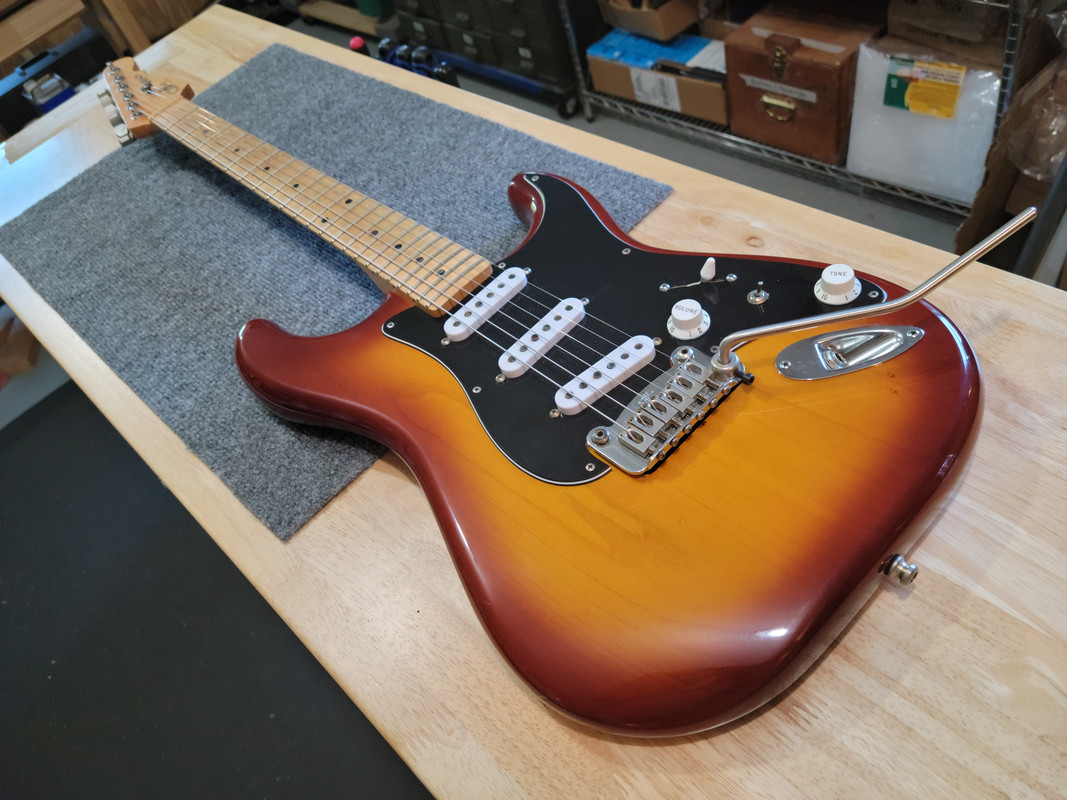
A select few of mine have nicknames based on their cosmetics.
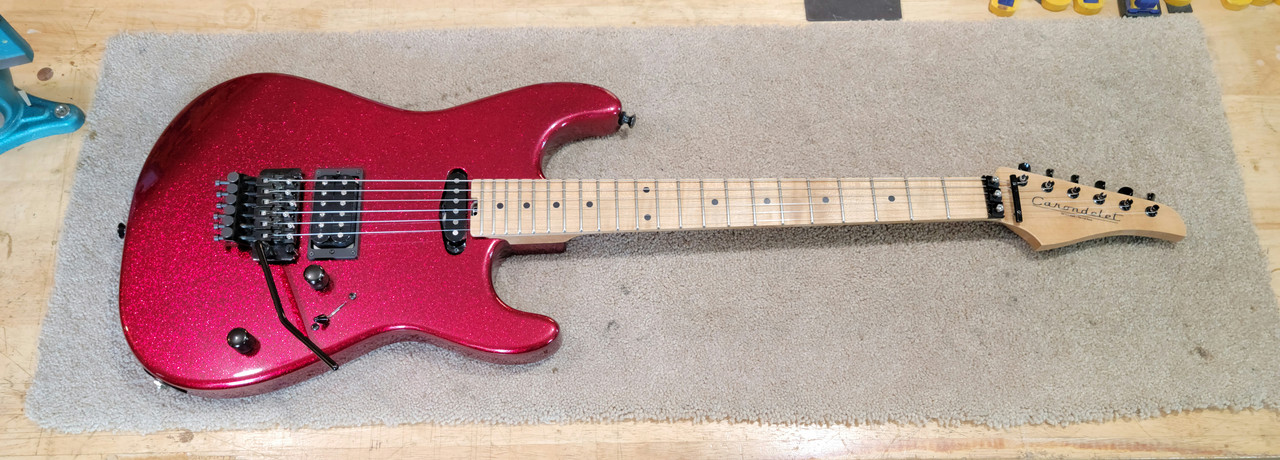
"Ruby" is the intense metalflake version of Dorothy's slippers.
"Barbie," short for BBQ, because the burst reminds me of a Carolina mustard sauce fading into a Memphis or Kansas City ketchup sauce.
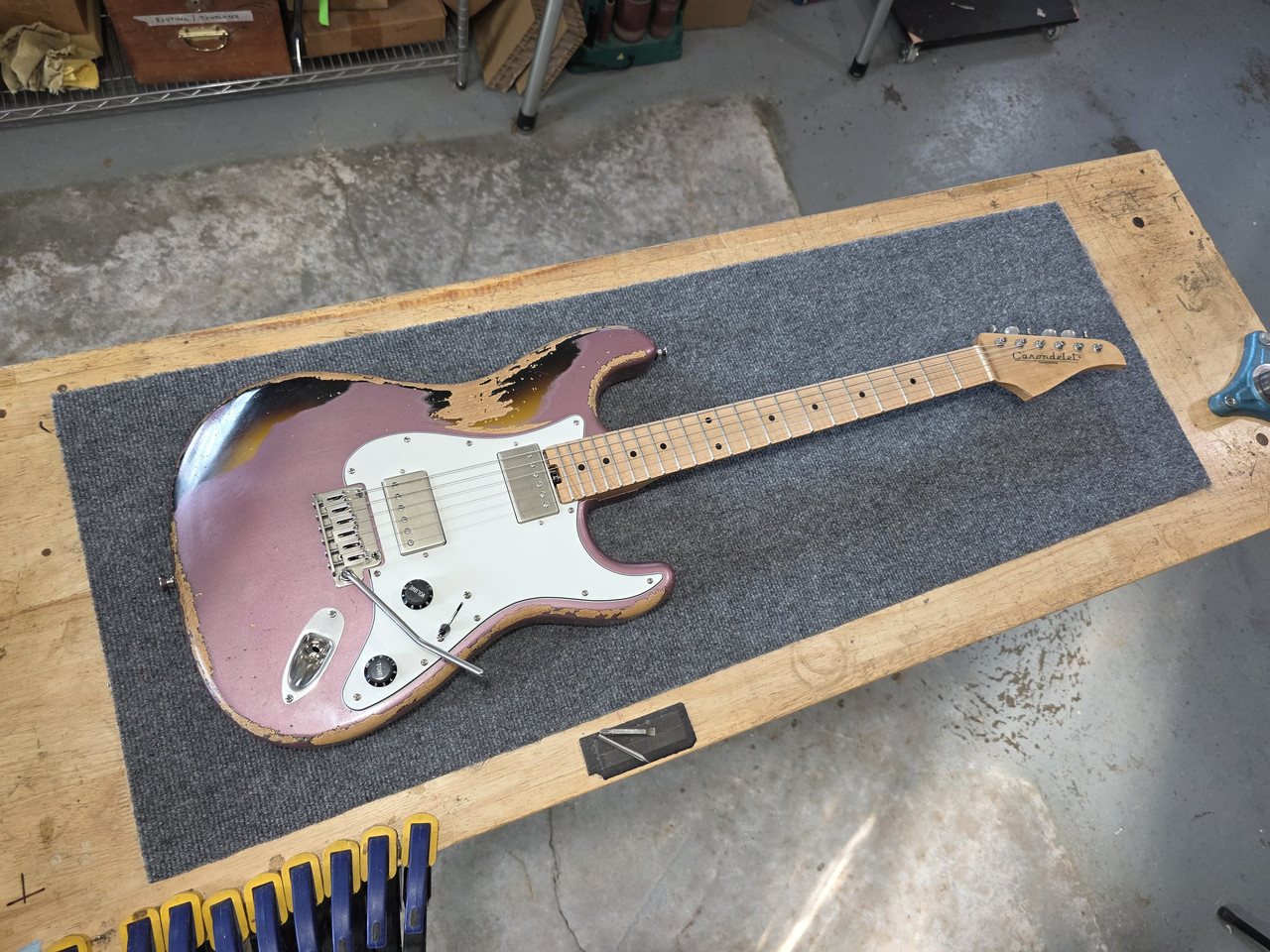
The 1960 Fender (and Buick) custom color "burgundy mist" atop a 50s two-tone sunburst and heavily relic'ed is "burgundy pissed."
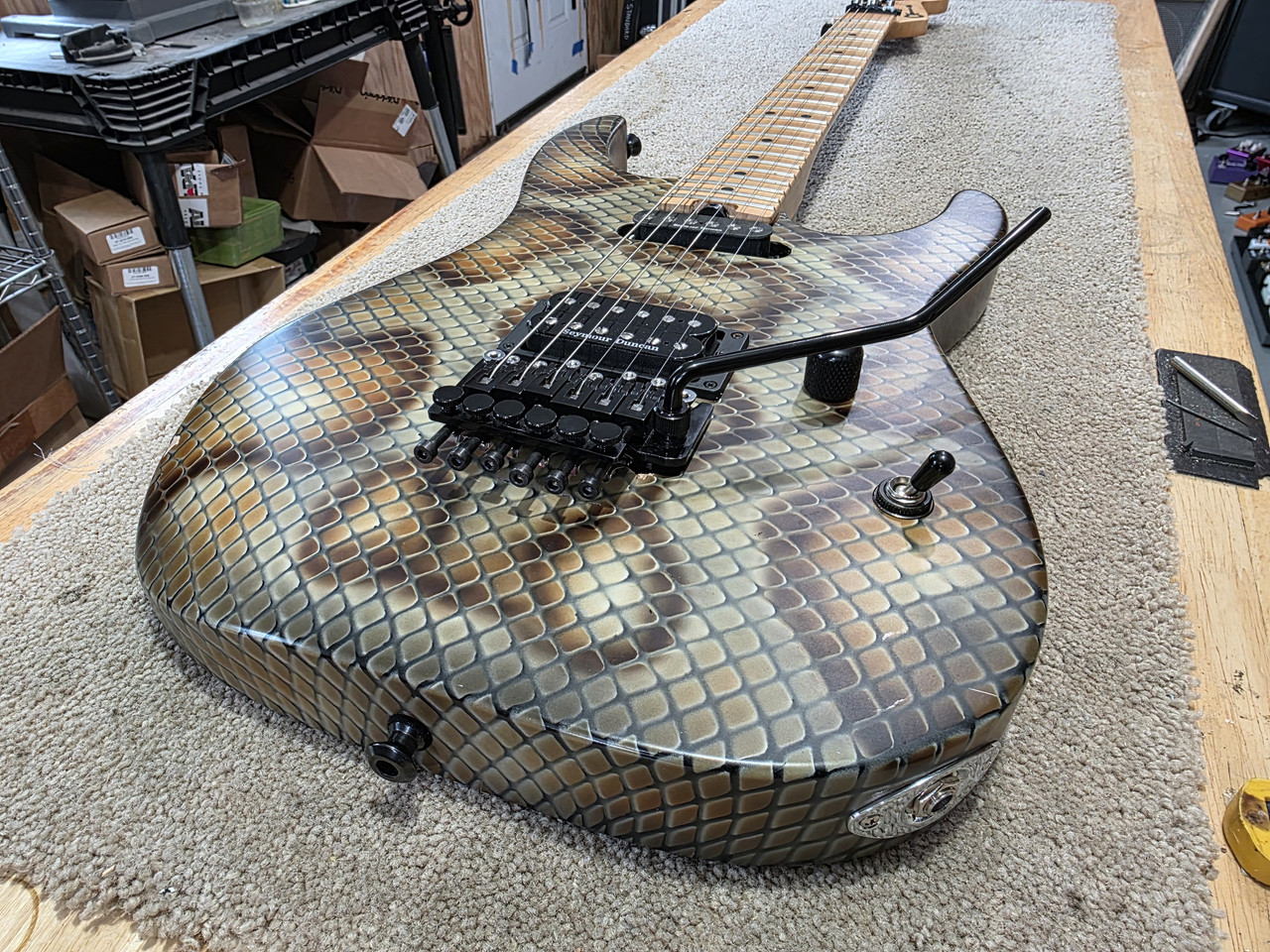
"Snake"
"Ruby" is the intense metalflake version of Dorothy's slippers.
"Barbie," short for BBQ, because the burst reminds me of a Carolina mustard sauce fading into a Memphis or Kansas City ketchup sauce.
The 1960 Fender (and Buick) custom color "burgundy mist" atop a 50s two-tone sunburst and heavily relic'ed is "burgundy pissed."
"Snake"
re: How would you mod this 2008 Mexi-Tele?
Posted by TheFretShack on 1/11/26 at 7:58 am to deeprig9
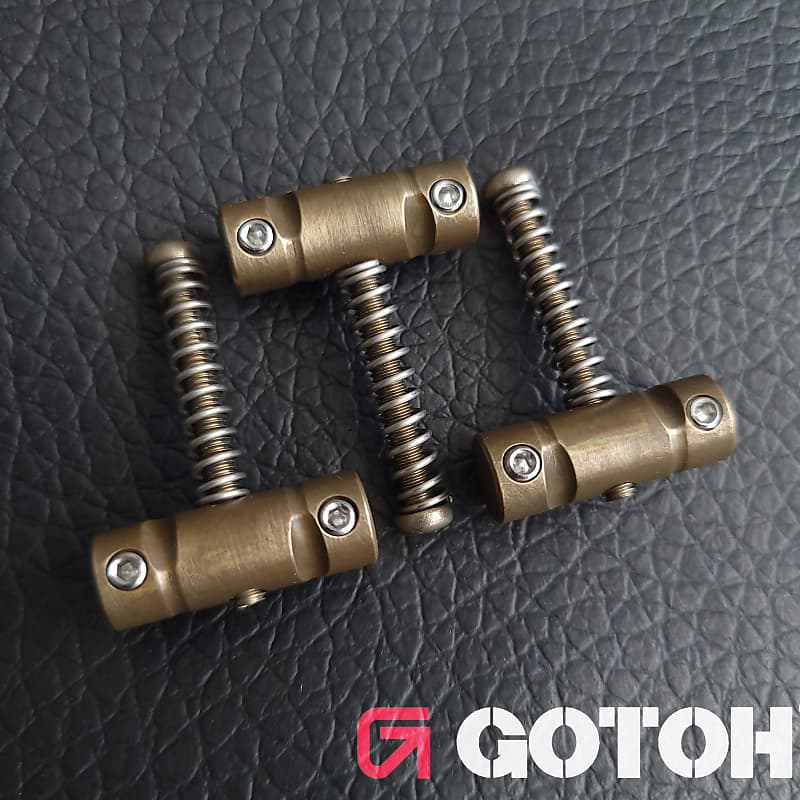
The MVP bang-for-the-buck MIM Tele upgrade ... if you find the treble icy, pull the modern six-steel-saddles bridge and replace it with a vintage style - and warmer yet still plenty bright sounding - three-brass-barrel bridge. The market's best value performer is a Gotoh replacement that has their intonation-friendly compensated brass barrel saddles.

---------------------------
Before you consider pickup upgrades, make sure the control plate is CTS potentiometers. If not, I am a big fan of Mojotone's vintage taper 250K short shaft pots for Strats and Teles. You will pay a little more for the "MOJO" stamped pots, but they have a sweeter wiper sweep, a tighter spec tolerance, even the turning friction is perfect, not too stiff, not too loose. Available at mojotone.com and via Sweetwater and Musician's Friend.

---------------------------
Before you consider pickup upgrades, make sure the control plate is CTS potentiometers. If not, I am a big fan of Mojotone's vintage taper 250K short shaft pots for Strats and Teles. You will pay a little more for the "MOJO" stamped pots, but they have a sweeter wiper sweep, a tighter spec tolerance, even the turning friction is perfect, not too stiff, not too loose. Available at mojotone.com and via Sweetwater and Musician's Friend.
Popular

 27
27