- My Forums
- Tiger Rant
- LSU Recruiting
- SEC Rant
- Saints Talk
- Pelicans Talk
- More Sports Board
- Fantasy Sports
- Golf Board
- Soccer Board
- O-T Lounge
- Tech Board
- Home/Garden Board
- Outdoor Board
- Health/Fitness Board
- Movie/TV Board
- Book Board
- Music Board
- Political Talk
- Money Talk
- Fark Board
- Gaming Board
- Travel Board
- Food/Drink Board
- Ticket Exchange
- TD Help Board
Customize My Forums- View All Forums
- Topic Sort Options
- Trending Topics
- Recent Topics
- Active Topics

Telstra
| Favorite team: | |
| Location: | |
| Biography: | |
| Interests: | |
| Occupation: | |
| Number of Posts: | 42 |
| Registered on: | 2/15/2017 |
| Online Status: | Not Online |
Recent Posts
Message
I just miss the old SEC Rant nightly OT thread crew. Tduecen is the only one I still see posting.

 1
1
Australians call trash "the bin"

re: Favorite TD member you wish would post more often ....
Posted by Telstra on 9/17/17 at 5:27 pm to SuperSaint
memphisplaya
Rohan2Reed
Rohan2Reed

re: Hurricane Irma - Spinning Down
Posted by Telstra on 9/5/17 at 5:00 pm to TigerBait2008
916 mb (millibars) is a measure of pressure. Generally, the lower the pressure, the stronger the storm. Katrina's lowest was 902
Nay. It wouldn't do anything. The hurricane center has a writeup about it. LINK
quote:
During each hurricane season, there always appear suggestions that one should simply use nuclear weapons to try and destroy the storms. Apart from the fact that this might not even alter the storm, this approach neglects the problem that the released radioactive fallout would fairly quickly move with the tradewinds to affect land areas and cause devastating environmental problems. Needless to say, this is not a good idea. Now for a more rigorous scientific explanation of why this would not be an effective hurricane modification technique.
The main difficulty with using explosives to modify hurricanes is the amount of energy required. A fully developed hurricane can release heat energy at a rate of 5 to 20x1013 watts and converts less than 10% of the heat into the mechanical energy of the wind. The heat release is equivalent to a 10-megaton nuclear bomb exploding every 20 minutes. According to the 1993 World Almanac, the entire human race used energy at a rate of 1013 watts in 1990, a rate less than 20% of the power of a hurricane. If we think about mechanical energy, the energy at humanity's disposal is closer to the storm's, but the task of focusing even half of the energy on a spot in the middle of a remote ocean would still be formidable.
Brute force interference with hurricanes doesn't seem promising. In addition, an explosive, even a nuclear explosive, produces a shock wave, or pulse of high pressure, that propagates away from the site of the explosion somewhat faster than the speed of sound. Such an event doesn't raise the barometric pressure after the shock has passed because barometric pressure in the atmosphere reflects the weight of the air above the ground. For normal atmospheric pressure, there are about ten metric tons (1000 kilograms per ton) of air bearing down on each square meter of surface. In the strongest hurricanes there are nine. To change a Category 5 hurricane into a Category 2 hurricane you would have to add about a half ton of air for each square meter inside the eye, or a total of a bit more than half a billion (500,000,000) tons for a 20 km radius eye. It's difficult to envision a practical way of moving that much air around.
Attacking weak tropical waves or depressions before they have a chance to grow into hurricanes isn't promising either. About 80 of these disturbances form every year in the Atlantic basin, but only about 5 become hurricanes in a typical year. There is no way to tell in advance which ones will develop. If the energy released in a tropical disturbance were only 10% of that released in a hurricane, it's still a lot of power, so that the hurricane police would need to dim the whole world's lights many times a year.
re: Hurricane Irma - Spinning Down
Posted by Telstra on 9/1/17 at 10:00 am to MottLaneKid

quote:
Contingency is:
If we don't play at NRG, I NEVER POST again.
If we do play at NRG, YOU NEVER POST again.
DEAL?
See ya
weather.gov
re: Michigan all maize uniforms vs Florida (who will be wearing all blue)
Posted by Telstra on 8/28/17 at 1:58 pm to HailHailtoMichigan!
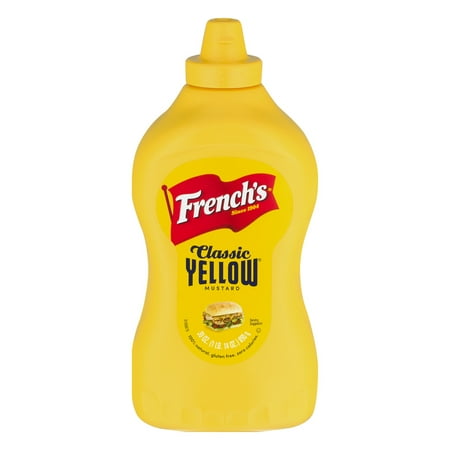
Smile you've got French's
That might be the worst map color scheme I have ever seen. I'm not even mad. That's amazing.
re: Can you still get last years coaches polo in white locally?
Posted by Telstra on 8/26/17 at 5:37 pm to King of New Orleans
Did they ever release that one with "LSU" inside the outline of the state?
'06 Mississippi State had a long lightning delay
There used to be an LSU one called The Geaux Show but I think they randomly stopped after the 2015 season. I don't know why they quit doing it or if they changed the name or something, but I enjoyed it back in the day (from 2006 on).
Target or Academy
re: AP: Robert E. Lee a racist icon
Posted by Telstra on 8/13/17 at 10:15 pm to magildachunks
quote:
He committed treason.
So did George Washington, Benjamin Franklin, et al. and yet they're universally worshipped from sea to shining sea.
re: Mike VII
Posted by Telstra on 8/9/17 at 1:05 pm to majoredinwhitehorse
quote:
location: lower alabama
Not surprising
re: Charles Hanagriff appreciation thread
Posted by Telstra on 8/3/17 at 7:32 am to TigerBait55
I'd like to echo the pro-Hanny sentiment. He really needs his own show.
I can't listen to Ott, bless his heart, but I have to fast forward through his rants when I'm listening to the sports today podcast replays.
I can't listen to Ott, bless his heart, but I have to fast forward through his rants when I'm listening to the sports today podcast replays.
Popular
 24
24