




- My Forums
- Tiger Rant
- LSU Recruiting
- SEC Rant
- Saints Talk
- Pelicans Talk
- More Sports Board
- Winter Olympics
- Fantasy Sports
- Golf Board
- Soccer Board
- O-T Lounge
- Tech Board
- Home/Garden Board
- Outdoor Board
- Health/Fitness Board
- Movie/TV Board
- Book Board
- Music Board
- Political Talk
- Money Talk
- Fark Board
- Gaming Board
- Travel Board
- Food/Drink Board
- Ticket Exchange
- TD Help Board
Customize My Forums- View All Forums
- Show Left Links
- Topic Sort Options
- Trending Topics
- Recent Topics
- Active Topics
Started By
Message
Why did Big Band have such a short run?
Posted on 9/11/25 at 3:24 pm

Posted on 9/11/25 at 3:24 pm
From about the mid thirties to late forties. Meanwhile rock is going on 75 years. Most of it is crap, but it's still dominant. Big Band is so good, but it's nonexistent except for nostalgia acts.
 8
8


Posted on 9/11/25 at 3:25 pm to Jim Rockford
It's expensive to run a big band, recording and touring.

Posted on 9/11/25 at 4:54 pm to Jim Rockford
WWII, the musicians strike, and a growing popularity of vocalists.
Posted on 9/11/25 at 5:08 pm to Jim Rockford
quote:
Why did Big Band have such a short run?
Remember that the peak popularity of big band was before amplification technology really started to be commonplace. In Big Band, only the vocalist has a microphone. No one else has any microphones or anything plugged in. They had to have a big band to be loud enough to fill the room with sound. As microphones, speakers, and electric guitars got better, you needed fewer people to fill a room with sound. Paying a 4 piece band is a LOT cheaper than paying a 16 piece band.


Posted on 9/11/25 at 5:18 pm to Jim Rockford
The various reasons already stated.
Also, the growing popularity of the electric guitar in R&B and country. One guitar is cheaper than a horn section.
While horns in country pretty much died out w/ western swing, they remained popular in R&B/Blues. Look at old R&B concert posters,advertising the headliner w/"orchestra" -- that is, not just a 4 piece blues combo.
During his lean times in the '60s, when he was reduced to a 5 piece act, B.B. King still toured w/2 horn players.
The big bands were the descendants of the Sousa marching bands and that beat. I think of big bands as the heavy metal of their era, R&R would take the heavy beat of the BBs, but replace the horns w/guitars.
Also, the growing popularity of the electric guitar in R&B and country. One guitar is cheaper than a horn section.
While horns in country pretty much died out w/ western swing, they remained popular in R&B/Blues. Look at old R&B concert posters,advertising the headliner w/"orchestra" -- that is, not just a 4 piece blues combo.
During his lean times in the '60s, when he was reduced to a 5 piece act, B.B. King still toured w/2 horn players.
quote:It's dominance ended w/the 20th century
Meanwhile rock is going on 75 years.
The big bands were the descendants of the Sousa marching bands and that beat. I think of big bands as the heavy metal of their era, R&R would take the heavy beat of the BBs, but replace the horns w/guitars.
Posted on 9/11/25 at 5:22 pm to Jim Rockford
A year ago Rick Beato extended that thought through to today, when he explored why are there no bands on the charts these days. Not big bands, just bands.

Posted on 9/13/25 at 6:20 pm to Jim Rockford
My grandfather had his own band during that era but unfortunately he was electrocuted wiring up a microphone he thought was not powered. I never got to know him
Posted on 9/15/25 at 10:14 am to Jim Rockford
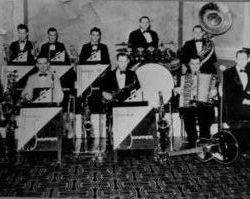
Everybody's already talked about the main reasons... the Petrillo musicians strike and recording ban (42-44), the WW2 draft constantly plucking band members, and most primarily, the immediate postwar economics, which made them unfeasible. It was surely also just the nature of WW2, all the turmoil, drama, and separation of family members, husband and wives, which led to audiences desiring the quieter, more sentimental ballads of vocalists, as opposed to big, loud, raucous bands.
There were also some stylistic changes in jazz that didn't help with popularity. The 'bop' trends of the mid-to-late-40s were adopted by many bands, like those of Woody Herman, Boyd Raeburn, Charlie Barnet, etc. Although bop was loved by the critics, the intellectuals, and the musicians themselves (who loved the aesthetic challenge), the sounds were not as conducive to dancing. And dancing was at the very heart of the big band craze. Similarly, you had Stan Kenton doing nervy, percussive stuff that wasn't good for dancing, while lots of other bands, like Earl Hines, Lionel Hampton, etc., became squealy trumpet-fests. More dynamics, less syncopation. All this music isn't necessarily bad, but I can see it alienating the average hometown music buff of the day. Old guard clarinet-playing leaders, like Shaw and Goodman, went more for third-stream styles, mixing classical or having small chamber-music approaches. Nice stuff, but not terribly commercial.
The economics, though, were the main killer. However, you still had a few relatively old-fashioned, middle-of-the-road bands continuing on into the 1950s and doing okay, all in the background of the changing cultural trends. Bands that stayed in somewhat traditional perimeters, like the mainstream Les Brown, the jazzier Count Basie, the sweeter Guy Lombardo. You had Tex Beneke keeping the Glenn Miller sound going, and Duke Ellington had his idiosyncratic approach continuing. There were a few midwestern-type mickey-mouse bands like Lawrence Welk doing their thing, and still prospering. But all these were still in the relative background of the musical scene, and none of it really had the verve, the zest, the life of the prime big-band years of 1935-42.
There were also some stylistic changes in jazz that didn't help with popularity. The 'bop' trends of the mid-to-late-40s were adopted by many bands, like those of Woody Herman, Boyd Raeburn, Charlie Barnet, etc. Although bop was loved by the critics, the intellectuals, and the musicians themselves (who loved the aesthetic challenge), the sounds were not as conducive to dancing. And dancing was at the very heart of the big band craze. Similarly, you had Stan Kenton doing nervy, percussive stuff that wasn't good for dancing, while lots of other bands, like Earl Hines, Lionel Hampton, etc., became squealy trumpet-fests. More dynamics, less syncopation. All this music isn't necessarily bad, but I can see it alienating the average hometown music buff of the day. Old guard clarinet-playing leaders, like Shaw and Goodman, went more for third-stream styles, mixing classical or having small chamber-music approaches. Nice stuff, but not terribly commercial.
The economics, though, were the main killer. However, you still had a few relatively old-fashioned, middle-of-the-road bands continuing on into the 1950s and doing okay, all in the background of the changing cultural trends. Bands that stayed in somewhat traditional perimeters, like the mainstream Les Brown, the jazzier Count Basie, the sweeter Guy Lombardo. You had Tex Beneke keeping the Glenn Miller sound going, and Duke Ellington had his idiosyncratic approach continuing. There were a few midwestern-type mickey-mouse bands like Lawrence Welk doing their thing, and still prospering. But all these were still in the relative background of the musical scene, and none of it really had the verve, the zest, the life of the prime big-band years of 1935-42.


Posted on 9/17/25 at 6:13 am to Aeolian Vocalion
Dang baw! You some kinda music history expert or something like that? You let it all hang out like you done been waiting on this day baw.
Posted on 9/17/25 at 1:10 pm to Dirk Dawgler
Well, when I was in my teen years, I was on quite a big-band kick. Used to buy tons of LP compilations, and original 78s. Even went and saw Harry James and his Orchestra. The first music concert I ever attended. Probably had 200 or so LPs, and hundreds more 78s.
Still listen to it somewhat, although after college my tastes began veering more to the older eras of earlier jazz and dance-band music of the pre-big band period.
Still listen to it somewhat, although after college my tastes began veering more to the older eras of earlier jazz and dance-band music of the pre-big band period.


Posted on 9/17/25 at 1:25 pm to Aeolian Vocalion

Posted on 9/18/25 at 6:37 am to Aeolian Vocalion
quote:
dance-band music of the pre-big band period.
What’s a name or two here you can recommend to someone who’s completely ignorant of the period but casually enjoys stuff like Glenn Miller?


Posted on 9/18/25 at 6:59 am to awestruck
quote:
Aeolian Vocalion
I have one similar to this 1929 Capehart M1W jukebox in my house. It's was my grandfather and plays 78 which are from that era.


Posted on 9/18/25 at 8:20 am to Aeolian Vocalion
quote:excellent analysis, thanks
Aeolian Vocalion
Hollywood used to be much better at portraying cultural trends even with their tendency to adhere to familiar storylines rather than challenging audiences
i always assumed that this film gave a pretty good accounting of what the Big Band Era you described was like:
not only does it feature Glenn Miller and his band in numerous performances, it also seems to capture the effect it had on the nation’s youth in the pre-war years
there’s another HD version on YT in the original glorious black and white if you prefer (i didnt embed it because it cut off the opening credits)
fans of 50s-70s TV will certainly recognize a couple of the minor characters
Posted on 9/18/25 at 9:44 am to Radio One
Well, you have the large, jazz-tinged orchestras of the pre-big band era, and then the 'swing' period, which is synonymous with the latter. Easier to give selections that represent the period, in terms of instrumental fare, so I'll go that direction:
1. "The Stampede" (1926) Fletcher Henderson
2. "Shake That Thing" (1926) Abe Lyman
3. "Deep Henderson" (1926) Coon-Sanders Nighthawks
4. "Brotherly Love" (1926) Elgar's Creole Orchestra
5. "Bell Hoppin' Blues" (1926) Paul Whiteman
6. "Clementine" (1927) Jean Goldkette
7. "Jubilee Stomp" (1928) Duke Ellington
8. "The Pay-Off" (1928) California Ramblers
9. "Here 'Tis" (1929) Fess Williams
10. "The Jones Law Blues" (1929) Bennie Moten
1. "Jazznocracy" (1934) Jimmie Lunceford
2. "Georgia Jubilee" (1934) Isham Jones
3. "Deep Jungle" (1934) Ben Pollack
4. "Roll 'Em" (1937) Benny Goodman
5. "Wednesday Night Hop" (1937) Andy Kirk
6. "Annie Laurie" (1937) Jimmie Lunceford
7. "Down Home Rag" (1938) Tommy Dorsey
8. "Back Beat Boogie" (1939) Harry James
9. "Oh Lady Be Good" (1939) Artie Shaw'
10. "Smokey Mary" (1939) Bob Crosby
11. "Memphis Blues" (1939) Will Bradley
12. "No Name Jive" (1940) Glen Gray
13. "The Sergeant was Shy" (1940) Gene Krupa
14. "Blues in the Groove" (1940) Jan Savitt
Not purporting to be the best, but just an overview of some pretty lively stuff.
1. "The Stampede" (1926) Fletcher Henderson
2. "Shake That Thing" (1926) Abe Lyman
3. "Deep Henderson" (1926) Coon-Sanders Nighthawks
4. "Brotherly Love" (1926) Elgar's Creole Orchestra
5. "Bell Hoppin' Blues" (1926) Paul Whiteman
6. "Clementine" (1927) Jean Goldkette
7. "Jubilee Stomp" (1928) Duke Ellington
8. "The Pay-Off" (1928) California Ramblers
9. "Here 'Tis" (1929) Fess Williams
10. "The Jones Law Blues" (1929) Bennie Moten
1. "Jazznocracy" (1934) Jimmie Lunceford
2. "Georgia Jubilee" (1934) Isham Jones
3. "Deep Jungle" (1934) Ben Pollack
4. "Roll 'Em" (1937) Benny Goodman
5. "Wednesday Night Hop" (1937) Andy Kirk
6. "Annie Laurie" (1937) Jimmie Lunceford
7. "Down Home Rag" (1938) Tommy Dorsey
8. "Back Beat Boogie" (1939) Harry James
9. "Oh Lady Be Good" (1939) Artie Shaw'
10. "Smokey Mary" (1939) Bob Crosby
11. "Memphis Blues" (1939) Will Bradley
12. "No Name Jive" (1940) Glen Gray
13. "The Sergeant was Shy" (1940) Gene Krupa
14. "Blues in the Groove" (1940) Jan Savitt
Not purporting to be the best, but just an overview of some pretty lively stuff.

Posted on 9/18/25 at 10:19 am to Jim Rockford
A dozen to 25 highly skilled musicians vs 4 or 5 twenty-somethings. Big Band is like symphony. You have them all over the world, but very few are actually good.
Posted on 9/18/25 at 12:03 pm to Aeolian Vocalion
quote:
Aeolian Vocalion
I really appreciate you taking the time to write out this list. Thanks.

 Page 1 of 1


Popular
Back to top
 Follow TigerDroppings for LSU Football News